If you’ve ever flipped a light switch and had power instantly flow, you’ve probably never stopped to think about the water that makes that happen. For power generation plants—whether they’re running coal, natural gas, nuclear, or even newer geothermal or biomass setups—water isn’t just a secondary resource. It’s the backbone of the entire operation. I’ve been in the industrial RO membrane supply game for over a decade, and one question I get asked almost every week is: “Wait, what’s a reverse osmosis membrane doing in a power plant? I thought that was just for drinking water.” Fair question—most people associate RO with water filters under sinks or bottled water, but industrial RO is a total game-changer for power plants, and I’ve seen firsthand how it keeps those facilities running smoothly, cost-effectively, and safely. Industrial RO Membrane
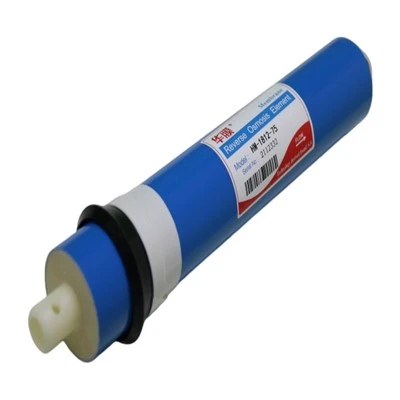
Let’s break this down, no boring jargon, promise. First, let’s get on the same page: what’s RO in industrial terms? Reverse osmosis is a process that pushes water through a super-tiny, semi-permeable membrane that blocks almost all dissolved solids, minerals, bacteria, and even some heavy metals. Unlike the home RO units you might know (which only filter a few gallons a day), industrial RO membranes are built for big loads—like tens of thousands of gallons per hour, exactly what a power plant needs. But why is that so critical there?
Power plants, regardless of type, need water for two big jobs: cooling and steam. For cooling, they use water to pull excess heat away from machinery—like the giant turbines that generate electricity. For steam, it’s even more important: whether it’s turning a steam turbine to make power or heating parts of a nuclear reactor, the water has to be as pure as humanly possible. If the water’s full of minerals like calcium, magnesium, or silica, that’s a problem. Over time, those minerals turn into scale—like the crust you get in a tea kettle, but way thicker and way more damaging. Scale builds up on heat exchangers, boilers, and turbine blades, which makes the machinery work harder, uses more energy, and can even cause unplanned shutdowns. I’ve had customers tell me scale cost them $100k+ in lost production in a single month—no joke.
That’s where industrial RO membranes come in. Before RO became standard in power plants, facilities used to rely on lime softening or ion exchange to treat water. Those methods work, but they’re messy, expensive, and generate way more waste. Lime softening uses tons of chemicals and produces sludge that has to be hauled away, which adds up in disposal costs. Ion exchange resins get clogged, need regular replacement, and can leach chemicals back into the water if they’re not maintained perfectly. RO changed that. Industrial RO cuts out 95-99% of dissolved solids from raw water (whether that’s river water, lake water, or even brackish groundwater), which means the water that goes to boilers and turbines is almost pure. Less scale, less maintenance, way lower long-term costs.
But it’s not just the water for steam or boilers. Power plants also use RO for blowdown water treatment, wastewater recycling, and even make-up water for their cooling systems. Let’s talk about cooling systems specifically. A lot of power plants use what’s called “once-through cooling,” where they pull water from a river or lake, run it through their cooling loops, and pump it back out. But pulling raw water in means you’re also pulling in debris, sediment, and microorganisms like algae. That stuff can clog pipes and cause corrosion. RO isn’t used directly for cooling water, but it’s used to treat the blowdown water— the small amount of water that’s released from the cooling loop to prevent mineral buildup—before it’s recycled or discharged. That cuts down on the amount of fresh water the plant needs to draw, which is huge for places with water shortages. I’ve worked with plants in the Southwest U.S. that were able to reduce their water usage by 40% just by adding our RO systems to their blowdown loops. That’s not just good for the planet—it’s a massive saving when water costs $500+ an acre-foot, which is the case in a lot of regions.
Now, not all RO membranes are the same for power plants, right? I learned that early on. Standard off-the-shelf residential RO membranes can’t handle the tough conditions in a power plant. Industrial RO membranes have to be built to withstand things like high pressure (power plants run RO systems at 150-300 psi, way higher than home units), pH fluctuations (cooling system water can be acidic or alkaline), and even small amounts of chlorine or other disinfectants that might be in incoming raw water. Wait, chlorine is a big one. A lot of raw water sources have chlorine added to kill bacteria, but chlorine eats away at the thin layer of polyamide that’s on most RO membranes. So we make power-grade RO membranes with a chlorine-resistant coating, or we add activated carbon filters upstream to neutralize chlorine before it hits the membrane. That’s the kind of customization that makes a difference—you can’t just buy any RO membrane and throw it in a power plant; you have to match it to their specific water source, their equipment, and their operating schedule.
Let me give you a real example. A natural gas plant I worked with in Texas was having constant issues with their boiler efficiency. Their traditional water treatment system was leaving about 15 ppm of silica in the make-up water, and silica is one of the worst scale culprits—it turns into glass-like deposits on boiler tubes that are almost impossible to remove without shutting down for weeks. They were spending $80k a year on chemical treatments and emergency maintenance. We installed our power-specific brackish water RO system, and now the silica levels are down to less than 0.1 ppm. Their boiler efficiency jumped 12%, and their annual maintenance costs dropped by 70%. That’s the kind of impact industrial RO has that you can’t get from a home filter.
Another big use case is nuclear power plants. These facilities have way stricter water purity requirements than fossil fuel plants, because any impurities can damage the reactor core or the steam turbines. I worked with a nuclear plant in the Midwest a few years back that had to upgrade their water treatment to meet new regulatory standards. Their old system was only removing 92% of dissolved solids, and regulators were threatening fines if they didn’t get to 99.5%. We supplied their high-purity industrial RO membranes, paired with a polishing step, and they not only met the standard but also reduced their waste water discharge by 55%. Nuclear plants can’t afford even a small contamination issue, so RO is non-negotiable there.
Wait, what about newer power generation setups, like solar thermal or biomass? Even those are using RO membranes now. Solar thermal plants use concentrated sunlight to heat water into steam for turbines, so same boiler issues as fossil fuels. Biomass plants burn organic material, and their waste water has high levels of dissolved solids that can’t be discharged without treatment—RO lets them recycle that waste water for make-up, so they don’t have to draw fresh water from local supplies. It’s not just old-school power plants; every type of generation is leaning into RO now to cut costs and meet environmental rules.
But it’s not all smooth sailing—RO systems do have maintenance needs, right? I tell customers all the time: RO isn’t a set-it-and-forget-it deal. Membranes can get fouled—meaning sediment, bacteria, or scale builds up on the surface, which blocks water flow and reduces efficiency. That’s why we work closely with our clients to set up regular cleaning schedules, and we even offer pre-filtration systems to catch big debris before it hits the RO membranes. For example, a coal plant I work with had issues with bacterial fouling because their raw water comes from a nearby lake with a lot of algae. We added a ultrafiltration system before the RO unit, which blocks 100% of bacteria and large particles, and that cut their membrane cleaning frequency from every 2 weeks to every 3 months. That saved them thousands in labor and chemicals.
Another thing I mention is that industrial RO membranes have a long lifespan—usually 5-7 years if maintained properly, which is way cheaper than replacing the whole treatment system every few years. I’ve seen membranes last 8 years with good care, and others fail in 2 if the plant skips maintenance. That’s why it’s not just about selling membranes to a plant; it’s about partnering with them to make sure the system runs right. We do site assessments, test their raw water, recommend the right membrane type, and even provide training for their maintenance teams. That’s how I’ve built my business—no hard sells, just honest advice based on what I’ve seen work over the years.
Let’s get real about why this matters beyond the plant floor. Power generation is one of the biggest industrial users of water globally, and with climate change making fresh water scarcer in a lot of regions, reducing water use is key. Industrial RO helps plants use less water, recycle more, and lower their environmental footprint. For example, a typical 500 MW power plant uses about 2 million gallons of water a day. If they use RO for make-up and blowdown treatment, that number can drop by 30-40 million gallons a year. That’s a lot of water saved for cities, farms, and ecosystems. Plus, less chemical use from traditional treatment means fewer harmful substances getting discharged back into waterways.
I get a lot of people asking why they should go with industrial RO from a specialized supplier like me instead of trying to DIY or use a cheaper membrane. Here’s the thing: power plant water systems are not a home kitchen. A membrane that’s cheap might work for a small scale for a few months, but it won’t handle the pressure, the water quality, or the 24/7 operation of a power plant. I’ve had customers come to me after buying cheap membranes that failed in 18 months, costing them more in downtime than if they’d just gone with the right ones upfront. Specialized industrial RO membranes are made to power-specific specs, which means they’re more durable, more efficient, and last longer.
So, if you’re someone who manages a power plant’s water treatment, or you’re responsible for keeping operations running, industrial RO isn’t just an add-on—it’s a core part of keeping your plant efficient, safe, and compliant. Whether you’re dealing with boiler scale, high water costs, regulatory fines, or just unplanned shutdowns, RO solves a lot of those problems.
At the end of the day, that’s what this is all about. I started supplying industrial RO membranes because I saw too many plants losing money and dealing with headaches from bad water treatment. Now, I get to work with plants of all sizes, from small biomass setups to large nuclear facilities, to set them up with the right RO systems that fit their needs.
Pan Ultrafiltration Membrane If you’re looking to upgrade your power plant’s water treatment, cut maintenance costs, or just talk through what RO can do for your specific setup, reach out to me. I’m happy to answer questions, do a free site walkthrough, or just give honest advice, no sales pitch required.
References
- American Council for an Energy-Efficient Economy. (2022). Water Use in Power Generation: Trends and Opportunities for Efficiency.
- International Water Association. (2021). Reverse Osmosis Applications in Industrial Power Generation.
- U.S. Department of Energy. (2020). Advanced Membrane Technologies for Industrial Water Treatment.
- Power Engineering Magazine. (2023). Industrial Water Treatment Best Practices for Thermal Power Plants.
- World Energy Council. (2022). Water-Energy Nexus: Role of Membrane Technologies in Sustainable Power Generation.
Fujian Huamo Technology Co., Ltd.
Fujian Huamo Technology Co., Ltd. is one of the most professional industrial ro membrane manufacturers and suppliers in China, featured by quality products and good service. Please rest assured to wholesale the best industrial ro membrane made in China here and get price list from our factory. Contact us for custom service and OEM service.
Address: No.6 Hengtong Rd, Shanmei Village, Xiamei Town, Nanan City, Fujian Province, China
E-mail: info@huaromembrane.com
WebSite: https://www.hmromembrane.com/
