Hey there! As a supplier of high-pressure membranes, I’ve had my fair share of experiences dealing with all sorts of questions about these little wonders. One question that pops up a lot is, "How does the cross-flow velocity affect the performance of a high-pressure membrane?" Well, I’m here today to break it down for you in a way that’s easy to understand. High Pressure Membrane
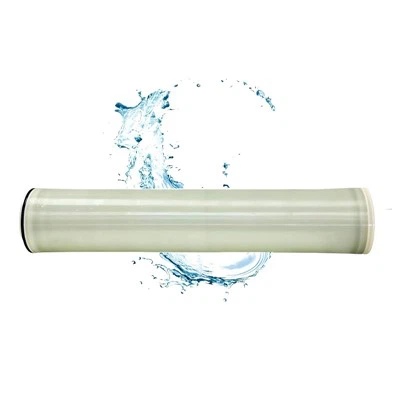
First off, let’s talk about what cross-flow velocity is. In simple terms, it’s the speed at which the fluid flows parallel to the surface of the membrane. Think of it like a river flowing past a rock. The faster the water moves past the rock, the more it can carry away any debris that might stick to it. In the case of a high-pressure membrane, the fluid (usually a liquid with some dissolved stuff in it) flows across the membrane surface while the pressure forces some of the liquid through the membrane, leaving behind the larger particles or molecules.
Now, let’s get into how this cross-flow velocity impacts the membrane’s performance. One of the most significant effects is on fouling. Fouling is when unwanted particles or substances build up on the membrane surface, which can block the pores and reduce the membrane’s ability to let the fluid through. A low cross-flow velocity means that the fluid isn’t moving fast enough to carry away these particles. So, they tend to stick around and accumulate on the membrane. Over time, this can lead to a significant drop in the membrane’s flux, which is basically the amount of fluid that can pass through the membrane per unit area and time.
On the other hand, when you have a high cross-flow velocity, it acts like a cleaning crew for the membrane. The fast-moving fluid sweeps away the particles before they have a chance to settle and form a fouling layer. This helps to maintain a higher flux over a longer period. For example, in a reverse osmosis system (a common application of high-pressure membranes), a higher cross-flow velocity can keep the membrane performance stable for months, rather than having it degrade quickly due to fouling.
Another aspect affected by cross-flow velocity is the mass transfer. Mass transfer is all about how the dissolved substances move from the bulk fluid to the membrane surface and then either pass through or are retained. A higher cross-flow velocity increases the turbulence near the membrane surface. This turbulence helps to break up the stagnant layer of fluid that forms close to the membrane. In this stagnant layer, the concentration of the retained substances can build up, creating a so-called concentration polarization. Concentration polarization is bad news because it can reduce the driving force for the fluid to pass through the membrane and also increase the likelihood of fouling. By increasing the cross-flow velocity, we can reduce the thickness of this stagnant layer and improve the mass transfer, which in turn enhances the membrane’s separation efficiency.
But it’s not all sunshine and rainbows with high cross-flow velocities. There are some downsides too. One of the main issues is energy consumption. Pumping the fluid at a higher velocity requires more energy. This can significantly increase the operating costs of a system that uses high-pressure membranes. So, there’s always a balance to strike between getting the best membrane performance and keeping the energy costs in check.
Another consideration is the mechanical stress on the membrane. High cross-flow velocities can create more shear stress on the membrane surface. If the membrane isn’t designed to handle this stress, it can lead to physical damage over time. This damage can cause leaks or even a complete breakdown of the membrane. So, when choosing a cross-flow velocity, we need to make sure that the membrane material can withstand the associated forces.
In real-world applications, finding the optimal cross-flow velocity is crucial. For instance, in a water treatment plant that uses high-pressure membranes to desalinate seawater, engineers have to carefully calculate the right cross-flow velocity. They need to consider factors like the quality of the seawater (how much salt and other impurities it has), the type of membrane being used, and the desired output rate of freshwater. If they set the cross-flow velocity too low, the membranes will foul quickly, and the plant will have to shut down frequently for cleaning or membrane replacement. On the other hand, if they set it too high, the energy costs will skyrocket, and there’s a risk of damaging the membranes.
When it comes to our high-pressure membranes as a supplier, we take all these factors into account. We offer membranes that are designed to work efficiently at a range of cross-flow velocities. Our R&D team is constantly working on improving the membrane materials to be more resistant to fouling and better able to handle higher shear stresses. This means that our customers can have more flexibility in setting the cross-flow velocity in their systems, depending on their specific needs and constraints.

We also provide support to our customers in determining the best cross-flow velocity for their applications. We have a team of experts who can analyze the input water characteristics, the desired output, and the system configuration to come up with a customized solution. This ensures that our customers get the most out of our high-pressure membranes in terms of performance, energy efficiency, and long-term reliability.
DTRO If you’re in the market for high-pressure membranes or are looking to optimize the performance of your existing membrane system, I encourage you to reach out. We’re here to help you find the right solution for your needs. Whether you’re a small-scale water treatment facility or a large industrial plant, we can provide you with high-quality membranes and the expertise to get the best results. So, don’t hesitate to contact us for a discussion about your requirements and how we can help you achieve your goals.
References
- Cheryan, M. (1998). Ultrafiltration and Microfiltration Handbook. Technomic Publishing.
- Baker, R. W. (2004). Membrane Technology and Applications. John Wiley & Sons.
- Mulder, M. (1996). Basic Principles of Membrane Technology. Kluwer Academic Publishers.
Hangzhou Nanoimp Environmental Technology Co., Ltd.
With abundant experience, we are one of the most professional high pressure membrane manufacturers and suppliers in China. Welcome to wholesale high quality high pressure membrane in stock here and get pricelist from our factory. We also accept customized orders.
Address: Road 25, Baiyang Street, Qiantang District, Hangzhou City, Zhejiang Province
E-mail: keith.wang@nano-sepmer.com
WebSite: https://www.nanoimp-membrane.com/
