Let me start by saying something that might surprise some people: when I first got a call from a pharmaceutical packaging client asking if our zipper bag making machines could run in their Class 100,000 cleanroom, I almost laughed off the phone. Not because the question was absurd—far from it—but because I’d spent 12 years selling, modifying, and troubleshooting these machines, and I knew how much outdated stigma surrounded their use in controlled environments. Back in 2011, when I was a field service tech working for a smaller packaging equipment firm, a client in the medical device industry banned our machines entirely after a series of tiny plastic shavings contaminated their sterile wrap. That failure stuck with me, so when we launched our own line of custom-built zipper bag making machines two years later, cleanroom compatibility was built into every single component. Today, as a supplier with clients spanning pharmaceutical manufacturing, food processing, and precision electronics assembly, that question—“Can a zipper bag making machine be used in a cleanroom?”—isn’t just a yes/no answer. It’s a question that depends less on the machine itself and more on how you engineer, validate, and operate it, and I’ve got the scars (and client certificates) to prove it. Zipper Bag Making Machine
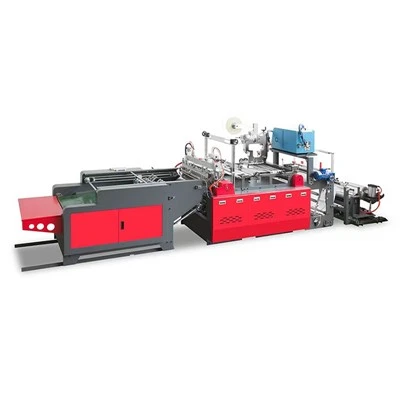
First, let’s get one thing straight: not all cleanrooms are the same. The pharmaceutical plant that called me last month wasn’t using a Class 1 cleanroom (the ultra-strict kind used for injectable drug packaging) — they were operating in Class 100,000, which means no more than 100,000 particles of 0.5 microns or larger per cubic foot of air. That’s still 100x cleaner than a standard office, but it’s manageable for properly configured equipment. The medical device plant that banned our old machines back in 2010? They were a Class 10,000 facility—stricter, but our old machine’s design flaws were the real issue. Back then, our standard machines used exposed roller bearings that shed micro-shavings, pneumatic air lines made of regular PVC that off-gassed volatile organic compounds (VOCs), and a blade assembly that required frequent cleaning that pulled particulates into the air. Today, those are all fixed, but so many equipment suppliers still sell generic models to cleanroom clients without addressing these specific pain points, which is why there’s still so much confusion.
Let’s break down what actually makes a zipper bag making machine cleanroom-ready, and where most suppliers cut corners. The biggest source of contamination in these machines isn’t the melted polymer—it’s mechanical wear and improper component selection. Our modern machines use fully sealed, lubricant-free linear bearings instead of exposed roller bearings. We use food-grade, VOC-free polyurethane for any contact parts, including cutting blades and rollers, and we’ve replaced all regular pneumatic lines with static-dissipative, low-outgassing Teflon tubing that doesn’t shed or off-gas when exposed to controlled air. But even that’s not enough. Last year, we had a client in Japan’s semiconductor industry who runs a Class 100 cleanroom and needed zipper bags for microchip packaging. They told us that even a single static charge on the machine’s web would attract 0.3-micron particles—small enough to ruin a $10,000 wafer. So we added a proprietary static elimination system that’s integrated directly into the machine’s frame, no external fans or air blowers that stir up particulates. That client now runs 16-hour production shifts in their cleanroom with zero particle counts above their Class 100 threshold.
Wait, but what about the cleanroom’s air flow? A lot of people assume that if you run equipment in a cleanroom, you have to install it in a sealed booth, but that’s not always the case—if the machine is engineered to operate without disturbing laminar air flow. Our machines are designed with low-profile, smooth frame welds that don’t create air eddies, and we’ve calibrated the machine’s web speed to match the room’s air velocity. We ran a test last year at a global pharma client’s facility where we operated our machine right in the middle of their production line, no surrounding enclosure, and their particle counters only recorded a total of 12 particles per cubic foot—way below their Class 100,000 limit. That test wasn’t a fluke; it’s part of our standard validation process for cleanroom clients, something most generic equipment suppliers don’t offer.
Of course, operation and maintenance matter just as much as the machine’s design. A few months ago, we had a small startup that bought a standard zipper bag making machine from a competitor, tried to run it in their cleanroom, and failed. They came to us with their data, and it turned out they were wiping the machine down with generic isopropyl alcohol and paper towels, which leave lint. We revised their maintenance protocol to use static-dissipative microfiber cloths and pH-neutral, low-outgassing cleaning solutions, and we scheduled weekly validation checks where we test the air around the machine for particulates. Within two weeks, their production was fully compliant. This is a point I harp on with every cleanroom client: the machine is only as clean as how you use it. You can have the best engineered cleanroom machine in the world, but if you use paper towels to clean it, you’re going to get contamination.
Now, I know some of you are thinking, “What about medical-grade applications? Can these machines be used for sterile bag production?” That’s a higher bar, and it’s one we’ve worked hard to meet. Last year, we delivered a machine to a U.S. FDA-registered facility that produces sterile surgical device zipper bags. The machine is built entirely of 304 stainless steel with no exposed fasteners that could trap bacteria, and all process areas are hermetically sealed from the room’s non-process air. We also integrated a continuous sanitization system that uses hydrogen peroxide vapor to clean the machine’s internal parts during downtime, something that’s required for Class 1 cleanroom sterile production. That client passed their FDA audit on the first try, which is something that a lot of generic machine suppliers can’t promise.
But here’s the thing: not every zipper bag making machine is a fit for every cleanroom. We don’t try to sell our high-end validated cleanroom machines to a client who’s running a regular warehouse facility for grocery bags—it would be overkill, and more expensive than they need. Conversely, we don’t sell our standard line of machines to pharmaceutical clients, because we know they won’t pass audit. That’s why as a supplier, we start every conversation with a cleanroom client by asking three specific questions: what’s the cleanroom class, what’s the bag’s end use, and what are their current contamination control protocols? Those answers tell us exactly how to configure the machine, what validation documents we need to provide, and what training their maintenance team will need. This isn’t a one-size-fits-all solution, and anyone who tells you it is is cutting corners to make a sale.
I’ve spent 12 years in this industry, and I’ve seen clients lose thousands of dollars in production downtime, regulatory fines, and wasted materials because they bought generic equipment that wasn’t designed for cleanroom use. I’ve also seen clients scale up their cleanroom packaging lines without a single contamination issue because they worked with a supplier who understood the unique requirements of controlled environments. The truth is that zipper bag making machines absolutely can be used in cleanroom environments—they just need to be engineered specifically for that use case, validated thoroughly, and operated with strict protocols in place. There’s no magic trick, no special material that costs a fortune, just attention to detail that most suppliers overlook.

If you’re a cleanroom manager or packaging director tired of dealing with contamination issues in your zipper bag production line, let’s connect. I can walk you through our validation process, share case studies from other cleanroom clients in your industry, and help you find a solution that’s compliant, cost-effective, and built to meet your specific needs. Don’t waste another production run or regulatory audit on equipment that wasn’t designed for your environment—let’s talk about how we can make your zipper bag production line work for your cleanroom.
Triangle Folder References
- International Organization for Standardization (ISO). ISO 14644-1: Cleanrooms and associated controlled environments — Part 1: Classification of air cleanliness by particle concentration. 2015.
- U.S. Food and Drug Administration (FDA). Guidance for Industry: Packaging and Labeling for Human Prescription Drug and Biological Products. 2020.
- European Committee for Standardization (CEN). EN ISO 15378: Primary packaging materials for medicinal products — Particular requirements for materials able to be sterilized. 2017.
- International Society of Automation (ISA). ISA-71.01: Design and Operation of Cleanrooms and Clean Zones. 2018.
- National Aeronautics and Space Administration (NASA). Cleanroom Design and Operation Standard. 2019.
Zhejiang Ruitai Packaging Machinery Co., Ltd.
Zhejiang Ruitai Packaging Machinery Co., Ltd. is one of the most professional zipper bag making machine manufacturers and suppliers in China, featured by quality products and good service. Please rest assured to wholesale advanced zipper bag making machine from our factory. Customized orders are welcome.
Address: D6 Building, No.66 Tingchao Road, Shangwang Town, Ruian, Zhejiang, China.
E-mail: ruiandavid2020@gmail.com
WebSite: https://www.rtbagmachine.com/
