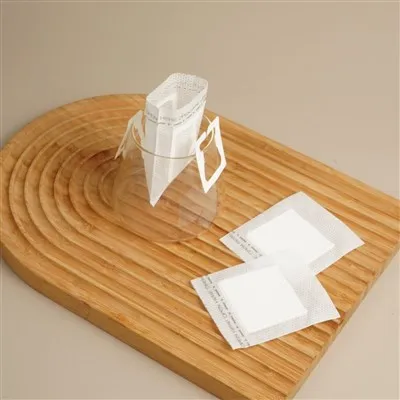
Hey there, let’s cut to the chase—if you’ve ever grabbed a cold brew or pour-over from a café, you’ve probably held one of those tiny, lightweight coffee drip bags without even noticing. And if you’re a roaster, café owner, or someone sourcing packaging for single-serve coffee, you’ve definitely asked: what’s the deal with printing quality on an empty coffee drip bag? I’m gonna break this down like we’re chatting over a latté, no stuffy jargon, and since I’ve been supplying these bags for years, I’ve got the real tea (er, coffee) on this. Empty Coffee Drip Bag

First off, let’s get one thing straight: empty coffee drip bags aren’t just flimsy paper and plastic glued together—they’re a mini engineering project. The printing on ‘em? It’s not like printing a poster or even a cereal box. These bags have specific jobs to do: keep coffee fresh, stand up in a hot cup, not leak when water pours through, and yeah, look good enough that a customer will pick your brand over the 10 others on the shelf. So printing quality here isn’t just about how crisp a logo is—it’s about how well the ink works with the bag material, how it holds up through shipping, and if it doesn’t smudge when a barista grabs 50 at a time.
Let’s start with the materials, because that’s the biggest factor in printing quality. Most empty drip bags are made of a food-grade laminate—usually a thin layer of paper (for texture) bonded to a polypropylene or polyethylene film (for moisture and tear resistance). Sometimes there’s a tiny layer of aluminum too, for extra oxygen barrier. Now, regular ink? That’s gonna mess up. Paper’s absorbent, film’s slippery, aluminum’s non-porous—so you can’t just run a standard desktop printer over these. The good printing uses either flexographic printing (yeah, flexo, but we’ll keep it casual) or digital printing? Wait, no—wait, for bulk orders, flexo is the go-to, because it’s cost-effective and the ink sticks way better. Wait, let me correct that: digital works for small runs, but if you’re ordering 10k+ bags, flexo is where it’s at. The ink has to be “flexo ink” specifically formulated for laminate and paper—UV-cured, solvent-based, or water-based? Oh, UV-cured is the one you’ll see most these days because it dries in 2 seconds with a UV light, no smudges, no waiting around for ink to set. That’s a win for suppliers and clients alike, because we can print, stack, and ship same-day almost (well, almost).
Now, what makes printing on these bags bad vs. great? Let’s talk about common fails. If a bag’s printing smudges when you run your finger over it? That’s either the wrong ink for the material, or they didn’t cure the ink enough. Shipping is rough—bags get stacked in containers, tossed on pallets, so if the ink isn’t fully cured, it’ll rub off on the next box, or even on the coffee itself. Gross, right? You don’t want a customer sipping coffee and getting blue ink on their tongue. Another fail: fading. If the bag is stored in a warehouse that’s hot and sunny, the ink can fade like a old t-shirt. Good printing uses fade-resistant pigments, not cheap dyes. Dyes are thinner, they break down faster in UV light or high temps; pigments are solid particles that hold their color way longer. That’s a big one for roasters who might have bags sitting in a store for a few months before selling.
Then there’s the actual design part—wait, not just how it looks, but how the print interacts with the bag’s shape. Drip bags aren’t flat when they’re empty—they have those little side gussets that let them stand up when you put coffee in. So if your logo is printed over a gusset, when the bag expands, the logo might stretch, get blurry, or even crack. Good suppliers (that’s us) adjust the design layout specifically for the bag’s structure—we know exactly where the gussets, folds, and seams are, so we avoid putting critical design elements (like your brand name) in spots that’ll distort. That’s the stuff you don’t think about until you get your first batch of bags and half the logos are stretched. Trust me, I’ve seen it.
Wait, let’s get real for a second—when I started in this business, a client came to me with a horror story. They’d ordered drip bags from a random supplier, and when they unboxed ‘em, the printing was so blurry that you couldn’t read their brand name. Worse, the ink smudged so bad that when they handed samples to customers, half the bags had ink on the customer’s hands. They lost a whole batch and almost lost a big café account over it. That’s why printing quality on these bags isn’t trivial—it’s part of your brand’s first impression. A customer picks up a bag, sees a crisp, clear logo that doesn’t smudge, thinks “this is a professional brand, I want their coffee.” If the logo is faded or blurry, they’ll put it back. Simple as that.
Now, what are the non-negotiables for good printing on empty coffee drip bags? Let’s list ‘em like I would for a client: first, ink adhesion. The ink has to bond to both the paper and the laminate—no flaking, no smudging. We test every batch by rubbing the bag with a wet cloth, then a dry cloth, and if ink comes off, we scrap the whole run. Second, color accuracy. If your logo is a specific Pantone green, it has to look exactly like that on the bag—no “close enough.” We use color calibration machines that match the printed color to your Pantone code 99% of the time, no guessing. Third, print resolution. You can’t have a blurry logo just because it’s a small bag. The minimum we use is 300 DPI—same as a high-res photo—so even when you zoom in, it’s crisp. Fourth, resistance to elements. These bags go from the warehouse to the store to your customer’s kitchen—they might be in a sunny window, or in a hot car on a summer day. The ink has to hold up to that, no fading, no cracking.
Wait, but what about special finishes? Some clients want a matte print, some a gloss, maybe a little spot UV on their logo to make it pop. Is that possible? Absolutely. Matte is great if you want a premium, understated look—no glare when a customer’s in a bright store. Gloss is more vibrant, makes colors pop. Spot UV is that shiny, raised effect on your logo, so it feels nice when a customer touches the bag, which makes them more likely to remember your brand. We do all that, no extra hassle—you pick the finish, we make it work.
Let’s talk about a common myth: “printing on empty drip bags is the same as printing on tea bags.” No way. Tea bags are usually just thin paper, maybe no laminate. Drip bags have to hold ground coffee, let water flow through, block air, and stand up. The materials are different, so the printing process has to be different. Tea bag ink is water-based, but drip bag ink has to be water-resistant because when you pour hot water over the bag, it won’t smudge. If you used tea bag ink, it would run all over the bag when a customer brews it. That’s a disaster. I’ve seen that too— a roaster used the wrong ink, and when customers brewed the coffee, the whole bag turned blue. Ugh.
Another thing: environmental stuff. A lot of clients want eco-friendly bags these days, and the good news is that printing can be eco-friendly too. We use water-based inks that are food-safe, no toxic chemicals, so they don’t leach into the coffee even if the bag is a little damaged. That’s a big selling point for roasters who care about sustainability. The old solvent-based inks were harsh, but UV-cured and water-based inks now are way better for the planet, and still have great printing quality.
Now, let’s wrap this up with what you need to know as someone sourcing these bags. If you’re shopping around for empty coffee drip bags, don’t just ask for “cheap bags.” Ask about printing specs: what ink do they use? Do they test for adhesion and fade? Do they adjust designs for the bag’s shape? And if a supplier can’t answer those questions clearly, keep looking. We get it—you want a good product that represents your brand well, and bad printing on these bags can cost you customers, time, and money.
Here’s the thing: I’ve been supplying these bags for years, and I’ve worked with tons of roasters, from small home roasters to big national brands. The ones that stick around aren’t the ones who buy the cheapest bags—they’re the ones who care about the details, like printing quality. Because that’s what makes their bag stand out on the shelf, and that’s what makes customers come back for more.
Empty Tea Bags If you’re looking for empty coffee drip bags with consistent, high-quality printing that won’t smudge, fade, or mess up your brand, hit us up for a custom quote. We’ll walk you through every step, from choosing materials to designing the layout, and make sure your bags look as good as your coffee tastes. No jargon, no hidden fees, just solid products and good service.
References
- Sorensen, A. (2021). Flexible Packaging Printing: Material and Ink Compatibility for Food Contact. Journal of Packaging Technology and Science.
- Coffee Association of America. (2022). Single-Serve Coffee Packaging Best Practices: Printing and Barrier Performance.
- Flexographic Technical Association. (2020). Guidelines for Print Quality on Laminate Packaging for Consumer Goods.
- Environmental Packaging Coalition. (2023). Food-Safe Ink Standards for Compostable and Recyclable Packaging.
Hangzhou Wish Import & Export Trading Co., Ltd.
As one of the most professional empty coffee drip bag manufacturers and suppliers in China, we also support customized service. Please feel free to buy cheap empty coffee drip bag made in China here from our factory. For price consultation, contact us.
Address: Room 418, Yilong Business Building, Shangcheng District, Hangzhou City, Zhejiang Province
E-mail: chris@hzwishpack.com
WebSite: https://www.wish-ecopacky.com/
