Hey there! I’m a supplier of translator devices, and I often get asked this question: Can a translator device translate financial terms? Well, let’s dive right into it. Translator Device

First off, let me tell you a bit about our translator devices. We’ve spent a ton of time and effort developing them to be as versatile as possible. They’re not just your run – of – the – mill gadgets. We’ve packed them with advanced technology that’s designed to handle a wide range of language needs.
Now, when it comes to financial terms, it’s a tricky area. Financial language is full of jargon, complex concepts, and terms that can have very specific meanings. For example, terms like "derivatives," "hedging," and "amortization" aren’t exactly everyday words. They’re used in the world of finance, and getting their translation right is super important.
Our translator devices are pretty good at handling a lot of these financial terms. We’ve loaded them with comprehensive dictionaries that cover a vast array of financial vocabulary. These dictionaries are constantly updated to keep up with the ever – changing world of finance. So, if you’re dealing with basic financial terms, chances are our device will be able to give you a decent translation.
But here’s the thing. Financial language is not just about the words themselves. It’s also about the context. A term might have a different meaning depending on whether it’s used in a banking context, an investment context, or a corporate finance context. For instance, the word "leverage" can mean different things in different financial scenarios. In a trading situation, it might refer to using borrowed money to increase potential returns. In a corporate setting, it could be about the ratio of debt to equity.
Our devices are equipped with context – sensing technology. They try to analyze the text around the financial term to figure out the most appropriate translation. But it’s not always perfect. Sometimes, the context can be really hard to nail down, especially if the text is complex or if there are multiple layers of meaning.
Another challenge with financial terms is that they can vary from country to country. What’s called a "bond" in the United States might have a different name or a slightly different meaning in another country. Our devices take this into account by having region – specific dictionaries. We’ve done our best to cover as many regions as possible, but there are still some nuances that can slip through the cracks.
However, we’re constantly working on improving our devices. We have a team of experts who are always researching and adding new financial terms to our dictionaries. We also use machine learning algorithms to improve the context – sensing capabilities of our devices. With each update, our translator devices are getting better at handling financial terms.
Let’s talk about some real – world scenarios. Say you’re a financial analyst who’s working on an international project. You need to understand reports from different countries, and you come across a bunch of financial terms that you’re not familiar with. Our translator device can be a great tool in this situation. It can quickly give you a basic understanding of what those terms mean, which can save you a lot of time and effort.
Or maybe you’re a small business owner who’s looking to expand overseas. You need to deal with financial documents in a foreign language. Our device can help you make sense of those documents, so you can make informed decisions about your business.
But it’s important to note that our translator device is not a replacement for a professional financial translator. If you’re dealing with high – stakes financial transactions, like mergers and acquisitions or large – scale investments, it’s still a good idea to get a human translator involved. A human translator can provide that extra level of expertise and nuance that a device might not be able to offer.
In conclusion, our translator devices can definitely handle a lot of financial terms. They’re a useful tool for getting a quick understanding of financial language in different contexts. But they have their limitations, especially when it comes to complex and context – sensitive terms. We’re committed to making our devices better and better, and we’re always open to feedback from our users.
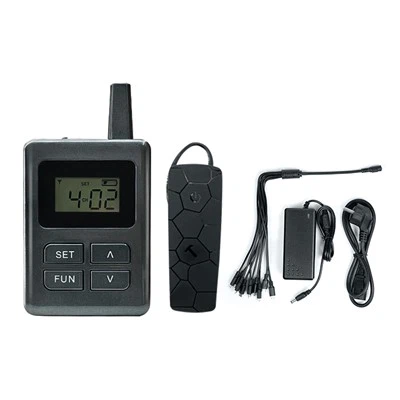
If you’re interested in our translator devices and think they could be a great addition to your financial toolkit, we’d love to have a chat with you. Whether you’re a financial professional, a business owner, or just someone who needs to deal with financial terms in different languages, our devices could be the solution you’re looking for. Reach out to us to start a conversation about how we can meet your translation needs.
One-way Tour Guide System References:
- Financial Jargon Dictionaries: Various industry – standard financial dictionaries used for development and updates.
- Research on Machine Learning in Translation: Academic studies on applying machine learning to improve translation accuracy, especially in specialized fields like finance.
Address: Building C, Yingte, West Yanglin Road, Electromechanical Industrial Park, Hefei High-tech Zone, Anhui, China
E-mail: yingmiguide@gmail.com
WebSite: https://www.yingmiguide.com/
