If you’ve ever worked with composite materials, you know prepreg isn’t just another raw material—it’s a product that can make or break the performance of your finished part, whether that’s a wind turbine blade, an aerospace component, or a high-end sports car body. As a prepreg supplier with 12 years in this space, I’ve seen every mistake someone can make with this tricky material, and I’ve watched those mistakes lead to wasted inventory, rejected parts, and months of project delays. Prepreg’s unique nature—part solid resin, part fiber reinforcement, sensitive to heat, light, and even gentle movement—means handling it isn’t something you can learn from a generic safety manual. It’s a skill that balances precision, consistency, and respect for the material’s built-in shelf life. Today, I’m pulling back the curtain on the daily practices that my own team trains every customer team to follow, to help you avoid the pitfalls that even seasoned technicians can stumble into. Prepreg
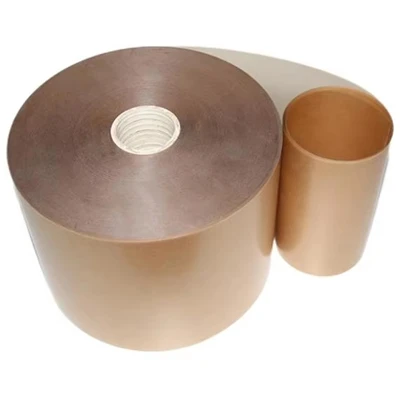
First, let’s ground this in what prepreg actually is, because so many of the handling mistakes come from not understanding its core property: it’s “semi-cured.” That means the resin is partially cross-linked, so it’s solid enough to hold its shape at room temperature, but still reactive enough to fully cure into a rigid, high-strength structure when exposed to heat and pressure. Unlike dry fiber, which is just woven or stitched fabric, prepreg has resin already impregnated into the fibers—so any disturbance to that resin distribution, or accidental partial curing before you’re ready, will ruin the material’s performance. For example, if you leave a roll of carbon fiber prepreg sitting on a sunlit factory floor for two hours, the resin will start to cross-link prematurely, leading to voids in your final part. If you bend a prepreg sheet too sharply, you’ll cause resin-rich areas to separate from fiber bundles, creating weak spots that won’t be visible until after curing.
Let’s start with the most basic step: receiving and inventory management. When prepreg leaves our facility, it’s sealed in vacuum packaging to keep out moisture and light, and shipped in insulated containers to maintain a temperature below -18°C (0°F) for standard epoxy systems. The first mistake many customers make is accepting delivery and immediately moving it to a regular freezer, not a dedicated industrial freezer. Home freezers fluctuate in temperature every time you open the door, and even a 5°C rise for 10 minutes can shorten the shelf life by 10%—not a huge deal in the short term, but if you have a 1000-meter roll, that adds up. We always tell customers to have a freezer set up specifically for prepreg, with a consistent temperature monitor that logs every change; we even provide small temperature data loggers for free so you can verify your system works. Another common error is letting prepreg sit too long. Our standard shelf life is 12 months when stored at -18°C, but once you hit month 11, we recommend using it first, even if it’s unopened. Resin cross-links slowly even in cold storage, and as a supplier, we can’t guarantee performance beyond that window—no amount of thawing will reverse that. When you take prepreg out of storage, never leave it in the open air longer than necessary. It’s tempting to set a roll on the workbench while you grab tools, but even at 20°C, prepreg will start to warm up and lose its tack (the stickiness that lets it bond to other layers) in 15 to 20 minutes. That tack is non-negotiable for layup; without it, layers will shift during curing, leading to uneven thickness and weak bonds.
Next, thawing prepreg correctly is make-or-break. I’ve seen teams skip thawing entirely and try to lay up frozen prepreg, which is a disaster. Frozen prepreg is brittle—fiber bundles will crack when you try to shape it, and the resin won’t spread evenly during curing. But thawing it wrong is almost as bad. The biggest mistake here is thawing prepreg at room temperature on a countertop, sealed in its original packaging. When the cold packaging hits warm air, condensation forms inside the bag, and that moisture gets trapped against the prepreg. Moisture is the enemy of prepreg curing: it boils off during the high-temperature cure cycle, leaving tiny voids that reduce the part’s strength by up to 15% and can cause delamination. Our recommended thawing method is two-step thawing. First, move sealed prepreg from the freezer to a dedicated 2 to 4°C (35 to 39°F) refrigerator 24 to 48 hours before use, depending on the roll size. This slow thaw prevents condensation by equalizing the temperature between the packaging and the environment. Then, when you’re ready to use it, take it out of the refrigerator, remove the outer packaging, and let it sit on the workbench for 1 to 2 hours, no more. This gives the prepreg time to reach room temperature without condensation, and you can tell it’s ready when it’s tacky to the touch, like a mild adhesive, not sticky enough to leave residue on your fingers but not dry. We also tell customers to avoid thawing multiple rolls at once; if you thaw two rolls for a job but only use one, seal the unused one back up tightly and return it to the refrigerator, not the freezer, for no more than 72 hours. Refreezing after full thaw damages the resin’s molecular structure, leading to inconsistent curing.
Once you’re on the workbench, layup practices are where most handling errors happen. First, your work environment matters. Prepreg is sensitive to dust, oils, and static electricity. We’ve had customers report a part failing after curing, only to find a tiny dust particle that got sandwiched between two prepreg layers during layup—enough to create a stress concentration that caused the part to crack under load. That’s why we recommend a clean room or a dedicated layup area with a HEPA filter, no food or drink (oil droplets will leave marks in the resin), and even static mats for your workbench; static discharge can affect small carbon fiber bundles, leading to uneven fiber distribution. When you’re cutting prepreg, use sharp, clean tools. Dull scissors or a cutting knife that has leftover resin from a previous job will pull at the fibers, creating frayed edges that can trap air during layup. We supply all our customers with specialized prepreg cutting blades at no extra cost, because a $5 blade is worth avoiding a $5000 part reject. Another common mistake is handling prepreg with bare hands. The oils on your skin can transfer to the resin, creating areas where the resin won’t bond properly. We always provide nitrile gloves (not latex, which leaves powder) to all new customers, and we enforce a rule: if your glove tears, change it immediately, and don’t touch the prepreg until you do. When aligning prepreg layers, never stretch or pull the material. Prepreg is pre-impregnated to a specific areal weight (the weight of fiber plus resin per square meter) which is critical for part strength. Stretching it changes the areal weight, leading to too much resin in some areas and too little in others, and the part will fail structural testing. If you need to shape prepreg around a curved part, do it gently, working from the center out to the edges to avoid creating wrinkles or gaps between layers. Wrinkles are another big issue; even a small wrinkle in a carbon fiber layer can reduce compressive strength by 30%, so if you make a mistake, don’t try to smooth it out after laying. Peel the layer back gently, adjust it, and re-lay it—fixing a wrinkle early is far easier than repairing a failed part later.
Vacuum bagging, the step after layup that compacts the layers and removes air, is often overlooked as a handling step, but it’s directly tied to how you worked with prepreg earlier. When you’re sealing the vacuum bag, make sure there are no gaps or tears that will let air in during cure. Even a small leak can leave voids, as I mentioned before. But before you apply the vacuum, make sure the prepreg is still tacky. If it’s lost its tack from sitting on the workbench too long, the layers will shift even under vacuum, leading to uneven compaction. We tell customers to check tack 10 minutes before vacuum bagging, and if it’s dull, discard that sheet—don’t try to use it. Another tip: when applying the breather cloth (the porous material that lets air escape during vacuum), make sure it doesn’t stick to the prepreg layers. If it does, it will pull resin out of the prepreg during cure, creating a resin-starved area that’s weak. We also recommend a slow vacuum pull, starting at 20 kPa and going up to 90 kPa over 10 minutes, instead of yanking the vacuum to full power. A fast pull can cause the resin to move too quickly, leading to uneven distribution and delamination of layers.
Now, let’s talk about what to do with leftover prepreg. It’s almost impossible to use every single piece, and throwing it away is a waste, but storing it wrong will make it unusable. If you have small cut pieces, seal them in an airtight bag with a small desiccant packet (to absorb any moisture) and return them to the refrigerator for up to 72 hours. For unopened rolls, if you didn’t thaw the entire roll, seal the original packaging tightly with tape and return it to the freezer—make sure to label it clearly with the date you received it, so you use older rolls first. Never store leftover prepreg in a workbench drawer or on a shelf; the fluctuating temperature and exposure to light and moisture will ruin it in days. I’ve had a customer bring us a roll of leftover prepreg that they stored in their garage for three months; when we tested it, the resin had partially cured, and it couldn’t be reactivated for layup. That’s a $200 roll wasted, just because they didn’t store it properly.
As a prepreg supplier, our job isn’t just to sell you material—it’s to make sure you can use it effectively. That’s why we offer on-site training for all new customers, where our technicians walk through every step of receiving, thawing, layup, and storage, and help you set up a system that works for your facility. We also provide free testing kits to let you check the tack and shelf life of prepreg you have on hand, so you don’t have to guess. We’re not just a vendor—we’re a partner, and our success depends on your parts succeeding.

If you’re tired of dealing with prepreg failures due to poor handling, or you’re looking for a consistent, high-quality prepreg that’s easy to work with, we’re here to help. We work with industries from aerospace to automotive to wind energy, and our team can tailor prepreg systems to your specific part needs, while also walking you through the handling steps that will make your process smoother. Reach out to our team to discuss your project, ask questions about prepreg handling, or request a sample to test in your facility. We’re ready to help you turn prepreg into the reliable material your parts depend on.
Insulating Paper References
- Composite Materials Handbook Volume 1: Polymer Matrix Composites, Society of Plastics Engineers, 2012.
- “Prepreg Handling and Storage Guidelines,” American Society for Composites, 2020.
- Carbon Fiber Prepreg Manufacturing and Processing, Woodhead Publishing, 2018.
- “Effect of Moisture Contamination on Prepreg Cure and Part Performance,” Journal of Composite Materials, 2019.
Wenzhou Gisen Insulation Material Co., Ltd.
As one of the most professional prepreg manufacturers and suppliers in China, we’re featured by quality products and good service. Please rest assured to wholesale customized prepreg from our factory. Contact us for quotation and free sample.
Address: Diyan Industrial Zone, Wengyang Subdistrict, Yueqing City, Zhejiang Province
E-mail: gisen888@126.com
WebSite: https://www.giseninsulation.com/
